In the race towards a greener future, businesses and financial institutions have been progressing at a snail’s pace despite their public commitments to sustainability. Greenwashing, a term used to describe deceptive claims of environmental responsibility, has become all too common.
Even United Nations secretary-general António Guterres has decried some net-zero emissions pledges as “shams” and “rank deceptions.” The need for a genuine transformation in the business and finance sectors is evident, and it requires a shift in mindset. Researchers now play a crucial role in turning sustainability ideas into reality.
The Role of Business and Finance in Sustainable Development
The United Nations Sustainable Development Goals (SDGs) lay out a roadmap for a sustainable future. Among these goals, SDG 9 emphasizes building resilient infrastructure, promoting sustainable industrialization, and fostering innovation.

Additionally, SDG 17 focuses on strengthening partnerships to implement these goals, particularly by increasing international aid, enhancing technology transfer, and improving the financial stability of low- and middle-income countries (LMICs).
Challenges in Achieving SDG 9
The slow progress in achieving SDG 9 is not solely the fault of businesses and financial institutions. Some of the targets within SDG 9, such as doubling the share of manufacturing in LMICs by 2030, can conflict with other sustainability objectives. While there has been progress in increasing manufacturing’s contribution to LMICs’ GDP, it is still insufficient.
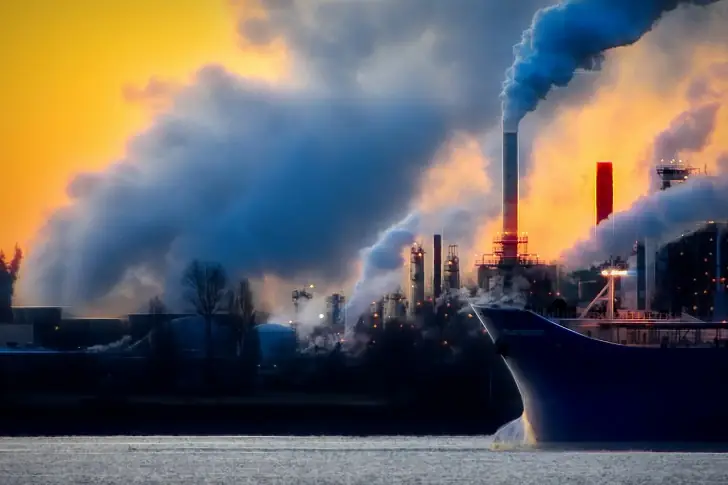
The interconnection between manufacturing and carbon dioxide emissions poses a significant challenge. Global CO2 emissions from energy and industries rose in 2022, reaching a new high of 36.8 billion tonnes. The global material footprint, signifying natural resource extraction, is rising, highlighting the need for improved reuse and recycling practices.
Defining True Sustainability
To make genuine strides toward sustainability, businesses and financial institutions must clearly define what it means to be sustainable, moving beyond vague net-zero emissions promises. Following the COP26 climate meeting in Glasgow, UN secretary-general Guterres convened a group of experts to develop standards for reporting net-zero emissions.
Independent verification of emissions targets is a critical step. Companies and institutions cannot claim progress towards net-zero emissions while investing in fossil fuels. Furthermore, reporting must be frequent and specific, not merely vague aspirations for the distant future. These recommendations must be implemented before the upcoming COP28 meeting in Dubai.
Overcoming Financial Obstacles
Another hurdle to sustainable industrialization is the lack of funding for renewable energy development. The UN Conference on Trade and Development reports that over $4 trillion is required annually to achieve the SDGs, a significant increase from $2.5 trillion in 2015.
LMICs often struggle to secure investments due to currency instability and higher interest rates against the US dollar, resulting in high repayment costs and default risks.

The Bridgetown Initiative
Barbados offers a potential solution to these financial challenges. Economist Avinash Persaud, an adviser to Barbados Prime Minister Mia Mottley, suggests that global financial institutions like the World Bank and the International Monetary Fund could provide bridging finance to compensate for currency-related losses.
This modest investment could unlock substantial funds for sustainable projects, as investors perceive LMICs as less risky. The Bridgetown Initiative, supported by French President Emmanuel Macron and prominent figures like US Treasury Secretary Janet Yellen and World Bank President Ajay Banga, holds promise.
The Research Imperative
The success of the Bridgetown Initiative relies on research to address various complexities. Researchers must investigate how debt contracts can be adjusted to protect countries affected by natural disasters from credit rating downgrades.
Additionally, they must explore innovative structures for investments and grants that ensure rapid funding for loss and damage, benefiting the most vulnerable populations. Existing systems often rely on national governments to distribute funds, leaving marginalized communities underserved.